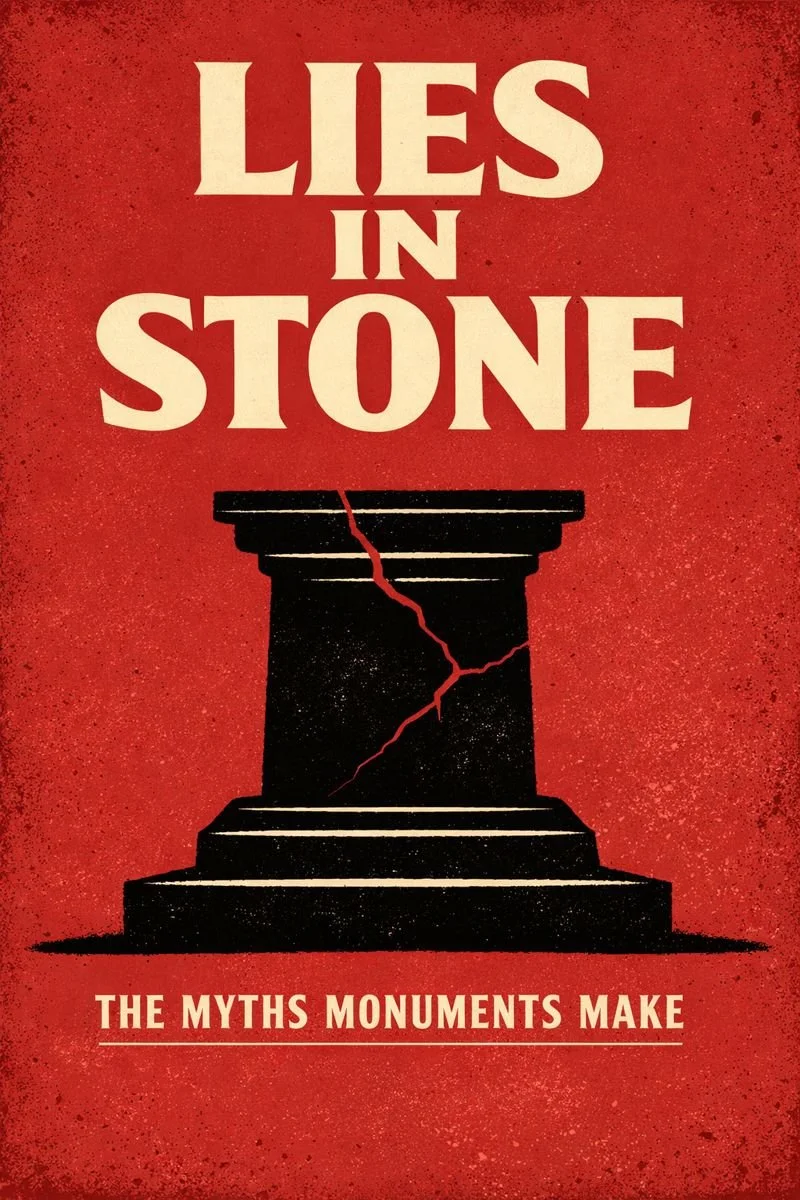
Stone does not tell the truth.
It tells the story power wants remembered.
From ancient Egypt to modern America, rulers have carved their versions of events into monuments meant to outlast memory itself. Victories are exaggerated, defeats erased, atrocities reframed as destiny. Over time, repetition hardens into “history.”
Lies in Stone examines thirty monuments across three millennia to show how stone, bronze, and marble have been used as tools of propaganda. From Ramses II’s towering battle reliefs to Confederate statues, fascist architecture, revolutionary mausoleums, and modern memorials, these structures do not simply commemorate the past, they edit it.
Each chapter dissects a monument’s origin, its political purpose, and the truths it omits. Civilian slaughter disappears behind triumphal arches. Slavery vanishes beneath heroic poses. Dictators are embalmed as benevolent fathers. Even democratic societies, the book argues, are not immune to mythmaking when national identity is at stake.
This is not a call to destroy history, but to read it critically. Monuments are not neutral artifacts. They are arguments made permanent, designed to shape memory, loyalty, and silence.
Clear-eyed, accessible, and rigorously grounded, Lies in Stone teaches readers how to see monuments not as timeless truths, but as carefully constructed stories, and how time, context, and power decide which stories get to stand.